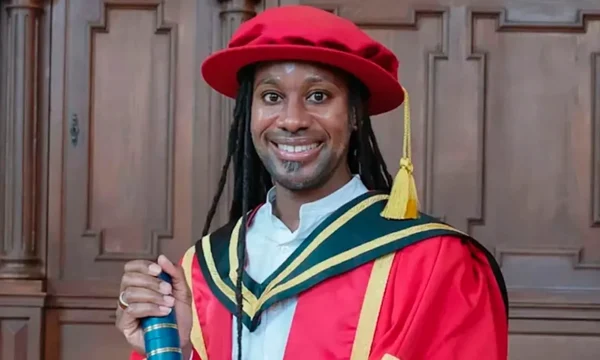
Following the tragic death of Professor Jason Arday at the age of 41, Sir Patrick Vernon OBE has called for Cambridge University’s promised investigation to go beyond the circumstances of Arday’s appointment and examine the institution’s wider culture.
Speaking to the Hackney Citizen, Sir Patrick said the review must consider duty of care, safeguarding, equality and institutional culture, rather than focusing only on recruitment and due diligence.
He has also questioned whether existing equality protections adequately protected Professor Arday as a Black, neurodivergent academic.
Challenging Anti-Blackness
For Sir Patrick, Professor Arday’s death raises wider questions about how Black academics and professionals experience discrimination, scrutiny and exclusion within major institutions.
He has called for stronger legislation addressing Afrophobia and anti-Blackness, alongside greater accountability for institutions. He has also raised concerns about the role of the media and social media, calling for stronger regulation to address the impact of sustained and disproportionate public scrutiny.
Sir Patrick was among those who publicly stood in solidarity with Professor Arday during the controversy surrounding allegations about his academic work. He has since established a memorial fundraiser, with the support of Jason’s family, to help with funeral and associated family costs.
Remembering Jason’s Legacy
Professor Arday’s contribution to education, social justice and inclusion should not be defined by the controversy surrounding his final weeks.
His historic position at Cambridge, his work on race, education, inequality and neurodiversity, and the impact he had on students and colleagues represent an important legacy.
The forthcoming Cambridge review provides an opportunity to look beyond procedures and ask deeper questions about institutional culture, equality and responsibility.
Honouring Professor Arday’s legacy must mean creating institutions where Black academics and professionals can thrive without disproportionate hostility, racialised scrutiny or isolation.
The questions raised by his death must lead to meaningful reflection, accountability and change.
Read the full article here
